AIM-AG was established in 1998 as part of the Department of Agricultural and Resource Economics, Agricultural Experiment Station (now AgResearch). The mission of AIM-AG is to assess and project the impacts of agri-industry development on the Tennessee economy and to analyze market opportunities for economically efficient agri-industry development within the state.
AIM-AG
- Evaluates the impacts the agricultural and forest products industry has on the state’s economy and the economics of regions within the state using TN-AIM (Tennessee Agri-Industry Model), an economic modeling system;
- Conducts “what-if” scenarios designed to evaluate the impacts that occur from development of selected value-added industries in the state and regions within the state;
- Conducts research studies on market growth opportunities for value-added or high-value agri-industry products;
- Analyzes market potential and feasibility for value-added or high-value products produced or processed within the state and;
- Provides market information and prospectus studies to aid industrial recruitment and development.
Our clientele
- Agribusiness decision-makers
- Producer and processor organizations
- Economic and community development leaders
- Policy makers
- Local, county, and state governments
Our Research Activities
Evaluate economic impacts of agri-industry development
- Impact analysis of changes in agricultural production and technologies
- Impact of value-added industries development
- Natural resource limitations on development
- Implications of development on the environment
Assess market opportunities for agri-industry development through:
- Expansion of markets for the existing agribusiness segments, both domestic and international
- Increased marketing efficiency
- Expansion into new agribusiness segments
Methods of Analysis:
- Market potential studies
- Market feasibility studies for new agribusiness ventures
- Demand analysis
- Buyer and consumer preferences studies
- Market segmentation analysis and buyer profiling
- New product acceptance and potential
- Analysis of marketing alternatives
- Valuation of product attributes
Tennessee agriculture includes farming and related industries, as well as value-added food and fiber production, processing and manufacturing. Agriculture accounts for 8.0 percent of the state’s economy and generates $65.6 billion in output. Agriculture supported close to 281,800 Tennesseans, with 92,889 (both full- and part-time) in agriculture production. In 2021, Tennessee had approximately 69,500 farms covering 10.7 million acres. Approximately 62.0 percent of the farms had sales in the $1,000 to $9,999 sales category, 31.5 percent of the farms had sales in the $10,000 to $99,999 sales category, and 6.5 percent of the farms had sales of $100,000 and over (USDA/NASS, 2020g). Average farm size in the state was 154 acres compared to 445 acres for the United States. Other southeastern states with similar average farm sizes as Tennessee include South Carolina at 195 acres, followed by North Carolina at 184 acres and Kentucky at 176 acres. Arkansas, Mississippi, and Missouri have average farm sizes at 334, 302, and 289 acres, respectively. Listed below is an overview of Tennessee’s top agricultural commodities. Most values are for 2021.
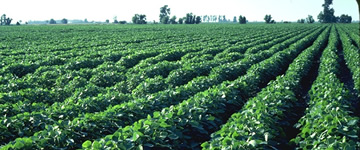
Soybeans = $781.9 million
- In 2021, approximately 76.0 million bushels of soybean were produced
- Harvested soybean acreages totaled 1.5 million acres
- Soybean yields averaged 50.0 bushels per acre
- Tennessee’s soybean industry was ranked 17th in the United States

Cattle & Calves – $582.8 million
- In 2021, Tennessee had roughly 1.79 million head of cattle and calves
- Number of beef cattle totaled 900,000
- Total cattle and calves production was 634.5 million pounds
- Tennessee’s cattle industry (all cattle) was ranked 16th in the United States
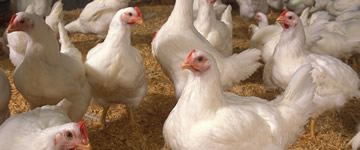
Broilers = $602.6 million
- In 2021, Tennessee produced 195.3 million broilers
- Broilers production totaled 1,132.7 million pounds
- Tennessee’s broiler production was ranked 15th in the United States
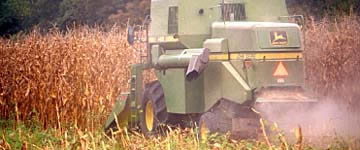
Corn – $864.8 million
- In 2021, Tennessee’s harvested corn acres totaled 960,000 acres
- Approximately 161.5 million bushels of corn were produced
- Yields averaged 170 bushels per acre
- Tennessee’s corn industry was ranked 17th in the United States

Horticulture
- In 2019, there were 501 horticultural operations with sales totaling $227.2 million
- Nursery stock operations totaled 258 with sales totaling $116.5 million
- Deciduous shade tree operations totaled 155 with sales totaling $28.8 million; deciduous flowering trees operations totaled 183 with sales of $28.7 million; broadleaf evergreens comprised 140 operations with sales of $13.4 million; and coniferous evergreen totaled 128 operations with sales of $12.8 million; and fruit and nut plants totaled 50 operations with sales of $25.5 million
- Sod operations totaled 42 with value of sales $22.0 million
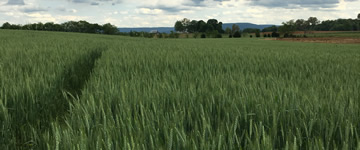
Wheat – $141.1 million
- In 2021, approximately 23.4 million bushels of wheat were produced
- Harvest acres totaled 330,000
- Yields averaged 71.0 bushels per acre
- Tennessee’s wheat industry was ranked 19th in the United States

Dairy – $97.1 million
- In 2021, 508.0 million pounds of milk were produced
- The number of milk cows totaled 28,000
- Tennessee’s dairy industry was ranked 32nd in the United States (based on number of milk cows)
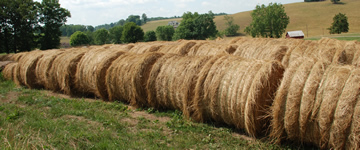
Hay – $192.9 million
- In 2021, close to 4.1 million tons of hay were produced on over 1.7 million acres
- The average yield was 2.36 tons per acre
- Alfalfa production totaled over 57,000 tons on over 15,000 acres
- Alfalfa yields averaged 3.8 tons per acre
- Based on production for 2021, Tennessee’s hay industry (not including alfalfa) was ranked 10th inthe United States; alfalfa was ranked 32nd
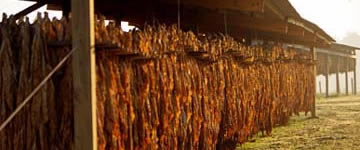
Tobacco – $78.9 million
- In 2021, Tennessee’s tobacco industry was ranked 4th in the United States (all tobacco)
- Approximately 12,000 acres were harvested
- Production totaled 30.2 million pounds
- Yields averaged 2,519 pounds per acre
- Varieties grown include burley and dark tobacco varieties
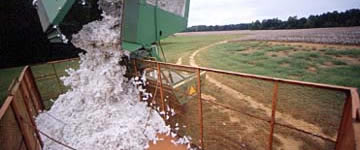
Cotton lint – $250.3 million
- In 2021, 583,000 bales of cotton were produced
- Acres harvested totaled 270,000
- Yields averaged 1,036 pounds per acre
- Cottonseed production totaled 183,000 tons
- Tennessee’s cotton industry was ranked 9th in the United States

Eggs – $68.9 million
- In 2021, approximately 373.7 million eggs were produced
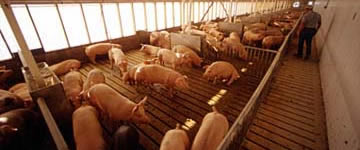
Hogs – $121.5 million
- In 2021, the number of hogs totaled 305,000
- Tennessee’s hog industry was ranked 19th in the United States
- Total hog and pig production was 184.9 million pounds
Sources:
Menard, J. 2023. “Economic Contributions of Agriculture and Forestry in Tennessee, 2021.”
U.S. Department of Agriculture, Economic Research Service (ERS). 2023. Data Files: U.S. and State-Level Farm Income and Wealth Statistics. “Annual Cash Receipts by Commodity, US and States, 2008-2023F.”
U.S. Department of Agriculture, National Agricultural Statistical Service (NASS). 2022. “Poultry – Production and Value 2021 Summary.”
U.S. Department of Agriculture, National Agricultural Statistical Service (NASS). 2023. Quick Stats Lite.
AIMAG research publications include economic impacts, market feasibility, cooperative studies, and/or survey related studies on agriculture/forestry industries, agriculture programs, bioenergy, livestock/crop sectors, food and beverage industries, livestock diseases, recreational activities, experiment stations, veterinary services, and bioenergy feedstock transportation.
Below is a listing of all areas for which we currently have publications.
- Economic Contribution/Impact Studies
- Agriculture and Forestry
- Agricultural Programs
- Livestock
- Crops
- Recreation
- TN AgResearch Centers
- Bioenergy
- Market/Feasibility Studies
- Ag/Forestry Inputs
- Primary Ag/Forestry
- Secondary Ag/Forestry
- Agritourism
- Other
- Studies on Cooperatives
- Study of Veterinary Services and Tennessee Animal Enterprises
- Water Analysis
- Agriculture and Forestry: Tennessee and Our Neighbors
Learn more by visiting our Publications page.
Decision-Aid Tool
The Wood Resource Transportation Analysis System (WTRANS) is a spreadsheet based program which allows wood residue users to examine:
- Where hardwood and softwood green mill residues may be located on a county-by-county basis in Tennessee,
- Estimates of transportation and delivered product costs on a county-to-county basis in Tennessee,
- Estimates of transportation and delivered product costs to your county from each county in Tennessee,
- Potential residue needs for energy use, and
- Estimated fuel cost comparisons using residues for greenhouse heating
Learn more by visiting our Decision-Aid Tools page.
AIMAG Personnel include: